
As inflation, provide chain challenges, labor points, and elevated meals prices bedevil operators, many are in search of methods to regulate bills. Decreasing back-of-the-house meals waste is one in every of them.
From utilizing expertise to trace the quantity of waste they produce to monitoring how a lot meals they really buy to utilizing up the components saved of their pantries and walk-ins, restaurateurs are getting extra inventive about working extra effectively.
Swapping provides
Chad Langston, district supervisor for a Zaxby’s franchise in Clarkesville, Ga., says his group of 12 shops controls prices by speaking commonly and swapping provides. Every retailer purchases what they want, after which trades and shares with the others.
The observe began on the top of U.S. provide chain points, however now the managers do it to chop down on waste and making pointless purchases. “All the group members have nice relationships with one another; that’s why it really works so nicely,” he says.
The GMs talk with one another to seek out out what every one has and what they may want. Because the week progresses they commerce merchandise primarily based on every retailer’s inner menu combine knowledge. Earlier than ordering a resupply of an merchandise, a supervisor will first attain out to fellow shops to see if they’ll spare the product.
“Some areas promote extra salads, whereas others promote extra wings, so we swap if and the place merchandise are wanted.”
Churning beef into butter
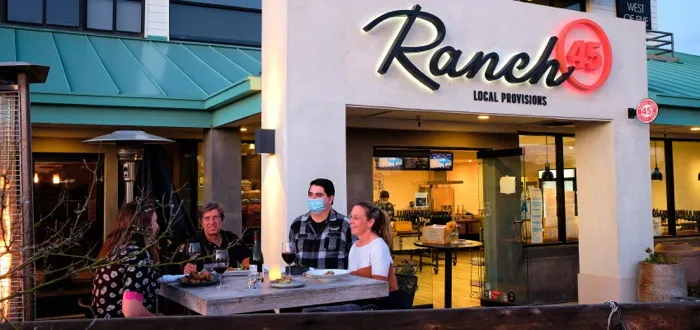
Pam Schwartz, co-founder and basic supervisor of Ranch 45 in Solana Seaside, Calif., says her restaurant, which makes a speciality of steaks and different beef-centric dishes, purchases complete cows from native provider Brandt Beef, and makes use of each half to scale back its waste and meals prices.
For instance, the kitchen melts fats scraps into beef tallow, which is used as shortening in pastries, desserts and breads. The restaurant even makes cleaning soap from it, which is bought on the premises.
“The fats scraps may have gone straight into the trash,” she says, “however I knew we may discover a method to generate income off … one thing most operators would think about waste.” Schwartz started by taking the scraps and clarifying them as you’ll butter. “We began by browning our steaks in it, after which began fascinated about what else we may do. That’s once we determined to make use of the tallow in our brownies, breads, and desserts.”
She discovered she may change 1 / 4 of the butter utilized by changing it with tallow. The associated fee on tallow is lower than 50 cents a pound, whereas butter is about $3 or $4 a pound.
“Proper now we’re engaged on utilizing it [instead of butter fat] to make ice cream,” she says. “We’re nonetheless making an attempt to determine the precise ratio so it isn’t overpowering. It must be good and style scrumptious.”
Measure waste to handle prices
Monitoring meals waste is among the only methods to scale back meals prices, says LeanPath advertising director Sam Smith.
In accordance with Smith, business kitchens sometimes waste 4% to 10% of the meals they buy earlier than it ever reaches the client’s plate. “If a restaurant with a $1 million annual meals price range loses $40,000 to $100,000 earlier than the meals leaves the kitchen, that’s an enormous inefficiency,” he says.
“The restaurant operator additionally loses on the labor she or he paid for to buy, stock, prep, and serve that meals. The value of meals waste is definitely dearer than the price of the meals itself. In case you’re seeking to achieve effectivity and scale back prices, controlling your meals waste is pretty low-hanging fruit.”
Smith notes that an operation overproducing an additional half pan of scrambled eggs on its breakfast buffet, for instance, may observe, analyze, and retailer that knowledge to find out why the meals was wasted and regulate manufacturing accordingly.
“Monitoring delivers the info and perception that you must attain the operational effectivity at this time’s financial setting calls for,” he says. “It’s important to establish the place the waste is happening, and make changes to stop it from reoccurring.”
This text is the second in a collection exploring the challenges brought on by inflation and what some business operators are doing to maintain margins.