
Following months of uncertainty, eating places are persevering with to rebound from the devastating results of the pandemic, however the mixture of rising meals prices, provide points, and labor shortages are nonetheless plaguing companies.
In June, the Nationwide Restaurant Affiliation’s evaluation of Bureau of Labor Statistics information indicated that meals costs have been up 9.6% since June 2020.
Main commodities registering the very best worth will increase year-over-year embrace:
- Fat and oils
- Rooster
- Pork
- Seafood
- Eggs
- Flour
Some restaurateurs are growing menu costs to maintain up with post-pandemic meals inflation.
“Meals inflation is unquestionably heating up,” says Hudson Riehle, the Affiliation’s SVP of Analysis. “Menu costs in June have been up 3.9% on a year-to-date foundation, basically marking it as the very best progress price since 2009, and wholesale meals prices are up 4.1% year-to-date, the very best since 2014. Proteins—hen, beef, pork—are posting the very best progress, and present USDA projections aren’t displaying a lot aid this yr. To manage, operators are adjusting their menus and portion sizes in tandem with elevating menu costs.”
Provide shortages as enterprise ramps up
Commodities analyst John Barone says a lot of the rationale for the value will increase is because of quick provide. For the final a number of months, no less than since April and particularly in June and July, shoppers have been returning to eating places. On the identical time, they’re persevering with to make grocery runs, and producers haven’t been in a position to scale up manufacturing. “They’ll’t get the uncooked supplies wanted or the required labor to course of them,” he says. “Due to this, they’re struggling to fulfill demand with tight provides and, in some instances, outright shortages.”
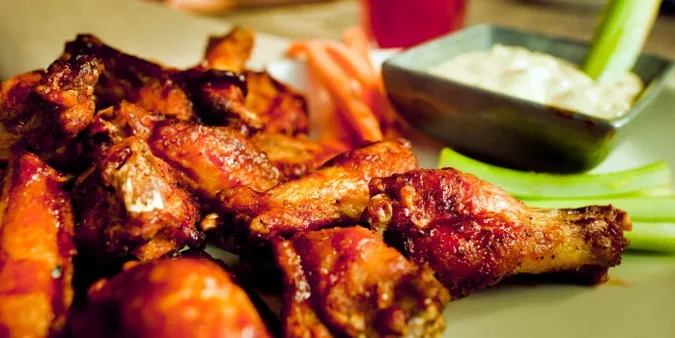
Rooster is in very quick provide, notably wings. Throughout the pandemic, wings particularly have been a terrific takeout merchandise. That’s one of many causes for the proliferation of digital wing ideas. However the one method to enhance the variety of wings accessible is to extend the variety of birds in manufacturing, and that’s the place everyone seems to be struggling, he says.
Breast meat provides are coming again, he notes, however costs are nonetheless excessive. To fulfill demand and preserve prices at bay, some eating places are re-engineering their menus to supply extra darkish meat alternatives.
“Wingstop, for instance, determined to roll out hen thighs in its place merchandise,” he says. “The model is taking a shot at it, principally just about, not at their brick-and-mortar areas, so it’s not an enormous funding. However, the value of darkish meat can be growing as a result of it’s seen as a superb different.”
One other bother spot, Barone warns, is fryer oil. The worth of soybean (vegetable) oil, a staple at eating places, is already operating at greater than twice the 5-year common, and isn’t going to return down anytime quickly, he says. As well as, almost half the soybean oil processed on this nation—roughly 46%—is was biodiesel gas, based on the U.S. Division of Agriculture.
Menu worth will increase? Not so quick …
Trade advisor Larry Reinstein, president of LJR Hospitality Ventures, says that apart from the present labor scarcity, rising meals prices and quick provides are essentially the most urgent points for restaurant operators.
He doesn’t suppose the state of affairs will probably be remedied for no less than a number of months. It’s not simply the rising costs of meals objects, but additionally the scarcity of packaging supplies which might be creating this enormous influence. If eating places want to elevate menu costs to compensate for elevated prices, he advises corporations that it’d make extra sense to carry the road for a little bit longer.
“Labor prices are decrease due to new operational efficiencies, but additionally due to the lack to seek out workers,” he says. “In lots of instances eating places aren’t executing as nicely, and a bump in worth may have a damaging impact on their visitors’ notion of worth. It’s actually going to return all the way down to how nicely eating places know their visitors, and their visitors’ understanding of how nicely they suppose the eating places are executing.”