
When TCS meals – meals that should be time- and temperature-controlled for security – stays in temperatures between 41°F and 135°F, it’s in danger for inflicting foodborne sickness. This vary is named the hazard zone as a result of pathogens thrive in these temperatures.
The longer meals stays within the temperature hazard zone, the extra time pathogens should develop. To maintain meals protected, you should hold it out of the temperature hazard zone or restrict the time it spends on this vary.
Listed here are six suggestions to assist make that occur:
1. Obtain meals accurately.
If meals isn’t protected while you obtain it, there’s nothing you are able to do to make it protected afterward.
- Buy meals from authorised, respected suppliers solely. These suppliers have been inspected and may present you inspection stories. They adjust to native, state, and federal legal guidelines.
- Obtain meals on the proper temperature. Obtain chilly TCS meals at 41°F or decrease except in any other case specified. Obtain sizzling TCS meals at 135°F or increased.
- Frozen meals ought to be frozen stable when acquired.
Practice staff to verify temperatures when meals is delivered to make sure it’s inside protected ranges. Search for indicators of thawing/refreezing, and empower staff to say no provides which might be out of the proper temperature vary or appear questionable.
2. Retailer meals accurately.
If meals will not be saved on the appropriate temperature, any pathogens within the meals can develop to unsafe ranges and trigger foodborne sickness.
- Retailer meals on the appropriate temperature. Retailer TCS meals at an inner temperature of 41°F or decrease or 135°F or increased.
- Retailer frozen meals at temperatures that can hold it frozen.
- Monitor meals temperatures often.
- Date-mark TCS meals which might be held longer than 24 hours. Refrigeration slows the expansion of most micro organism, however some sorts will develop nicely at refrigeration temperatures. Prepared-to-eat TCS meals saved at 41°F or decrease can solely be saved for a most of seven days. After this time some varieties of micro organism can develop to harmful ranges
3. Prepare dinner meals to the proper temperature.
To cut back pathogens in meals to protected ranges it is advisable to prepare dinner it to its required minimal inner temperature. As soon as the temperature is reached, you should maintain the meals at that temperature for a particular period of time.
Completely different meals have to be cooked to totally different temperatures:
165°F for <1 second (Instantaneous):
- Poultry, together with complete or floor rooster, turkey or duck
- Stuffing made with fish, meat, or poultry
- Stuffed meat, seafood, poultry, or pasta
- Dishes that embody beforehand cooked TCS elements
155°F for 17 seconds:
- Floor meat together with beef, pork and different meat
- Meat mechanically tenderized with needles or blades or by injecting it with brine or flavors (e.g., brined ham or flavor-injected roasts)
- Meat vacuum-tumbled with marinades or different options
- Floor meat from recreation animals commercially raised and inspected
- Ratites (principally flightless birds with flat breastbones), together with ostrich and emu
- Floor seafood together with chopped or minced seafood
- Shell eggs that might be held sizzling for service
145°F for 15 seconds:
- Seafood together with fish, shellfish and crustaceans
- Steaks/chops of pork, beef, veal and lamb
- Commercially raised recreation
- Shell eggs that might be served instantly
135°F (no minimal time):
- Meals from crops, together with fruits, greens, grains (e.g., rice, pasta), and legumes (e.g., beans, refried beans) that might be held sizzling for service
4. Maintain meals on the proper temperature.
Preserve sizzling meals cold and hot meals chilly to forestall micro organism from rising to unsafe ranges.
- Maintain chilly TCS meals at 41°F or decrease
- Maintain sizzling TCS meals at 135°F or increased
5. Cool meals as shortly as doable.
Pathogens develop nicely at temperatures between 41°F and 135°F, however they are going to develop a lot sooner between 125°F and 70°F. Meals must cross by this temperature vary shortly to cut back pathogen progress.
By no means cool meals at room temperature; as a substitute, cool meals from 135°F to 41°F or decrease inside six hours, as follows:
- First, cool meals from 135°F to 70°F inside two hours.
- Then cool it from 70°F to 41°F or decrease throughout the subsequent 4 hours.
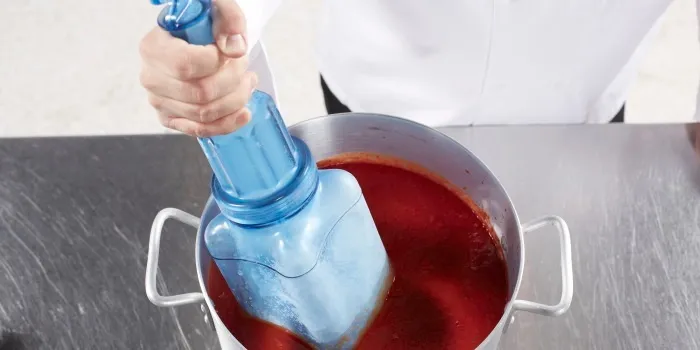
- By no means cool giant quantities of TCS meals in a cooler.
- Divide sizzling meals into smaller containers/quantities earlier than cooling.
6. Reheat meals the proper method.
If meals will not be dealt with fastidiously throughout holding or cooling, any pathogens within the meals can multiply to harmful ranges. Reheating meals correctly can scale back these pathogens to protected ranges:
- Meals that might be served instantly will be reheated to any temperature.
- TCS meals that might be reheated for warm holding should be reheated to 165°F for 15 seconds inside two hours.